
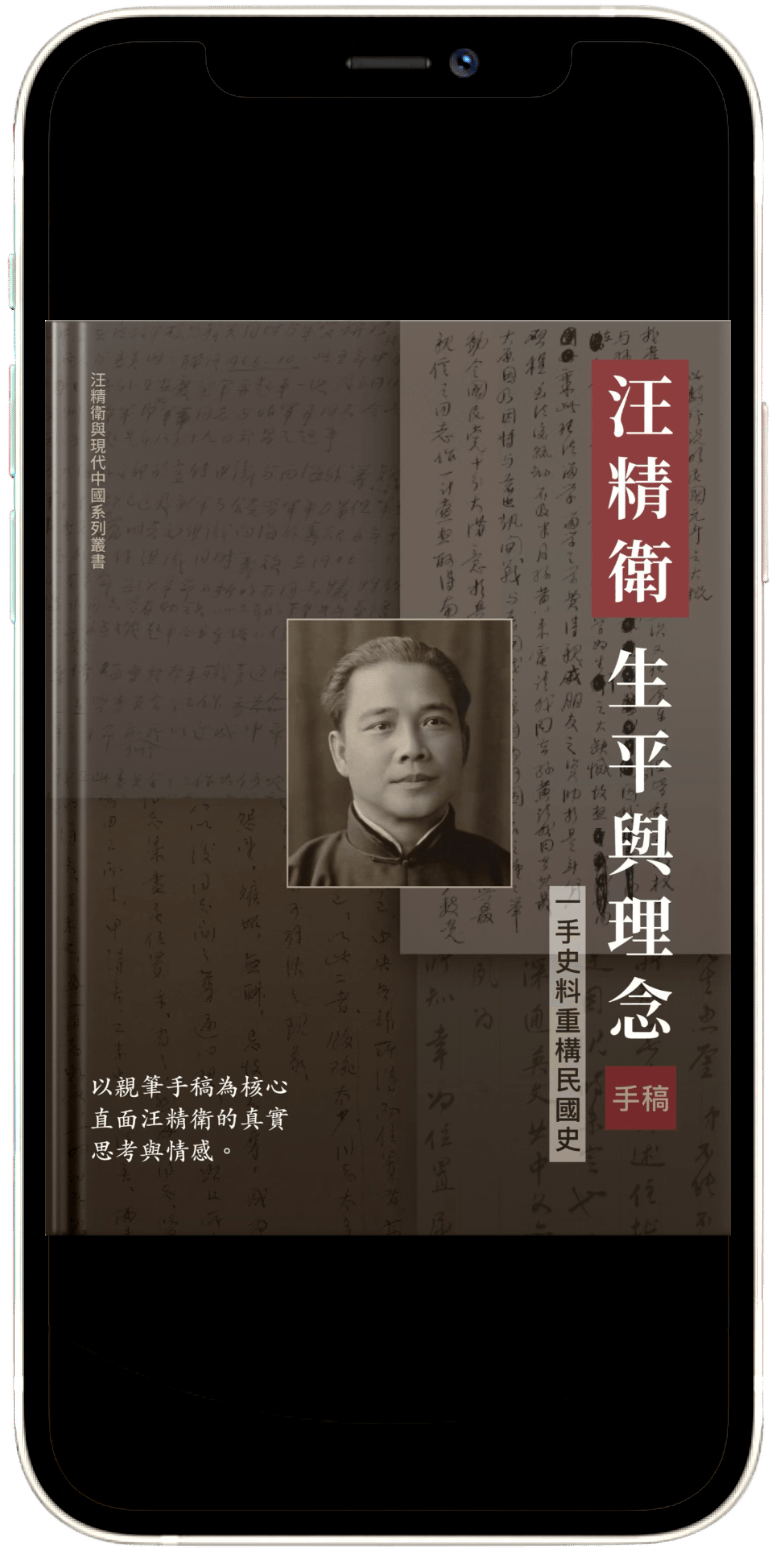
PUBLICATION:APRIL 5, 2026
Wang Jingwei & Modern China Series no. 14
ISBN:979-8-9887997-8-8
Details:Full Color
PRICE: $16.99 $9.99USD

Confronting True Thoughts and Emotions
Reconstructing the History of Republican China with Firsthand Materials
- The source material for Wang Jingwei: His Life, Ideas & Beliefs, featuring complete scans of original handwritten manuscripts.
124 pages of Wang Jingwei’s handwritten autobiographical draft, covering the period from his childhood education, study in Japan, until the Ninghan Split. A rare continuous first-person narrative.
- 55 private letters with close associates, friends and diplomat counterparts. Compared to his meticulously crafted poetry, these handwritten letters offer a more tangible glimpse into Wang’s true temperament and intimate details of his life.
- His handwriting, corrections and marginalia reveal the emotions, thoughts, and habits embedded in the act of writing.
- Includes Wang’s remembrances from Wang’s eldest daughter Wang Wenxing, Chen Gongbo’s son Chen Gan, and Zhu Weide’s son Zhu Weliang.
- Collected by his son-in-law Ho Mang Hang from relatives and associates, this compilation provides unedited firsthand materials in their original handscript to assist in reconstructing the history of the Republic of China era.
AUTHOR: Wang Jingwei (1883-1944)
Née Zhaoming, Wang Jingwei was born in Panyu, Guangdong Province. While studying in Japan, Wang met Sun Yat-sen and joined the revolution to overthrow the Qing dynasty. Using his talents as a writer and eloquent orator to spread the word of the revolution, Wang became Sun's chief associate, and was instrumental in building the Republic of China.
Wang’s poems written in 1910 while in prison for a failed assassination attempt on the Prince Regent Zaifeng, became some of the most recited verses in China at that time. Upon his release from prison, Wang became a national hero.
After the formation of the Republic, Wang continued to assist Sun Yat-sen, and wrote most of the Guomindang policies and declarations. Upon Sun’s death, Wang became the first Chairman of the Republic, and in 1932, the President of the Executive Yuan. In 1938, as Guomindang’s Deputy-General, Wang openly negotiated peace with the Japanese. In 1940, the Reorganized National Government is established in Nanjing with Wang as premier and chairman, in opposition to Chiang Kai-shek’s government in Chongqing.
In 1944, Wang Jingwei died in Nagoya, Japan.
Wang left behind numerous writings. In addition to his poetry collection Shuangzhaoloushicigao, he expressed his political views and attitudes in many essays. He once said: “My speeches and writings are the truest form of my life story. There is no need for any other autobiography.”
- 序 | 王克文
引言 | 梁基永
編輯前言
自傳草稿
掃描
謄錄 -
書信
回憶

弟只知為黨國出死力,是非毀譽早置度外。以私言之,我不負人,更無所謂宿怨。汪精衛